The Controversy Surrounding President Trump and Pope Leo: Implications for U.S. Catholics
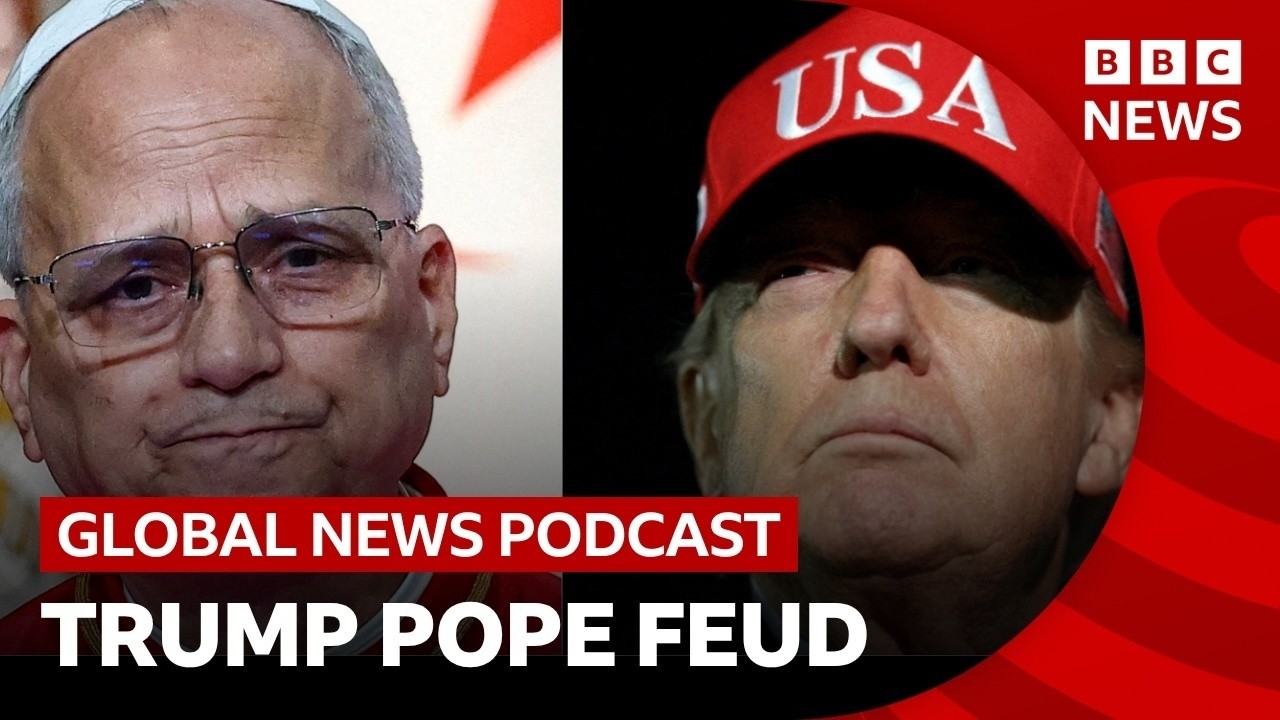
In a world increasingly polarized by political and religious sentiments, recent comments from President Trump regarding Pope Leo have ignited a firestorm of criticism and debate. This controversy began with Trump’s claim of having been instrumental in Pope Leo’s election, asserting that without him, the Pope would not hold his current position. Such statements, reminiscent of a personal vendetta, arose in response to perceived criticism from Pope Leo concerning the ongoing war in Iran, an issue that has drawn the ire of many across the globe.
Trump’s tirade was not merely verbal but extended into the realm of social media. An AI-generated image, which many interpreted as Trump depicting himself as a messianic figure, faced backlash that prompted him to remove the post. This self-portrayal stoked further debate, with critics questioning not only the appropriateness of Trump’s comments but also his understanding of Catholicism itself.
While Trump attempted to mitigate some of the backlash by claiming he intended to present himself as a doctor, his failure to issue an apology for both his social media post and remarks about the Pope has left many feeling unsettled. Some observers noted that even his allies, particularly Catholics in the U.S., have expressed disappointment, calling for him to reconsider his approach.
Among the strongest reactions came from Italian Prime Minister Giorgia Meloni, who publicly affirmed her solidarity with Pope Leo, stating her discomfort with a society where religious leaders are dictated to by political figures. Her comments underscore a growing sentiment among some global leaders who are reevaluating their relationship with Trump, particularly given his contentious foreign policy choices.
The rift between Trump and the Catholic community, especially in the U.S., raises intriguing questions about the electoral implications for 2024 and beyond. Historically, American Catholics have been politically divided; for instance, Latino Catholics tend to lean Democratic while white Catholics often favor Republican policies. However, a consensus emerges around specific issues like abortion and immigration, where deep divisions exist.
Recent months have seen mounting discontent among conservative Catholics who had previously aligned themselves with Trump. If anything, the sequence of events surrounding Trump’s engagement with Pope Leo may serve to crystallize dissatisfaction that is already simmering. The Pope’s remarks on critical issues such as the war in Iran have resonated within the faith community, prompting a reassessment of loyalties among Catholic voters.
Peter Wolfgang, a prominent conservative Catholic commentator, expressed concern that Trump’s attacks on Pope Leo might alienate his supporters. He pointed out that the Papacy embodies more than just a political office; it represents a spiritual authority deeply rooted in the Catholic faith. Attacks on the Pope, then, are perceived as assaults on the Church itself. Wolfgang’s comments hint at a potential seismic shift in support among conservative Catholics, emphasizing that this could lead to diminished political backing for Trump in upcoming elections.
As political and religious landscapes evolve, the question looms: Has Trump crossed a red line with the Catholic constituency? While many conservative Catholics continue to view Trump as a necessary ally against the backdrop of progressive policies, there remains a palpable sense of unease. The fear among some conservative leaders is that continued antagonism towards the Papacy may lead to a withdrawal of support not just for Trump, but for Republican candidates in general during the forthcoming midterms.
Bishop Joseph Strickland of Texas, previously a vocal supporter of Trump, articulated a growing frustration with the former president’s approach. He implored Catholics not to place their faith in a political leader, but rather to adhere to spiritual principles. Strickland, embodying a voice within the Catholic community, highlighted the supremacy of divine authority over earthly power—a reminder that resonates profoundly in the current political climate.
In summary, the evolving discourse around Trump and Pope Leo signals a pivotal moment for the Catholic Church in America. The repercussions of this confrontation extend beyond mere rhetoric; they challenge the basis of political support and present an opportunity for Catholics to reflect on their allegiances to faith over political ideology. As tensions mount, the Catholic vote may emerge as a significant factor influencing the trajectory of U.S. politics in the years to come.