The Downing of a U.S. Fighter Jet: A Critical Moment in U.S.-Iran Relations
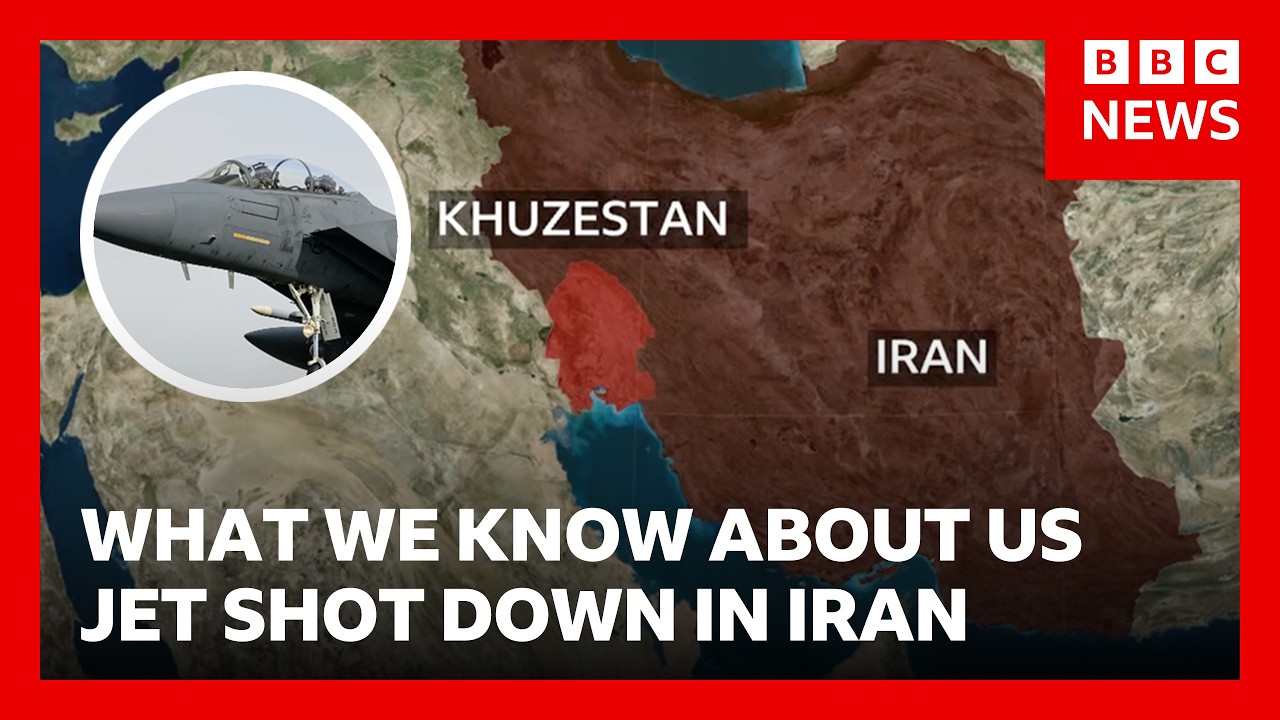
In a significant escalation of military tensions, Iranian state media has announced that it has successfully shot down a U.S. fighter jet. This incident, occurring over western Iran, marks a pivotal moment in the ongoing conflict, as it would be the first confirmed downing of an American aircraft by Iranian fire since the outbreak of hostilities. Recent images and videos released by Iranian authorities purport to show debris from the downed jet and one of its ejector seats. If verified, this occurrence could shift the narrative around U.S. military operations in the region.
Reports from CBS News confirm that a search and rescue operation is now underway, although details regarding the number of crew members aboard the aircraft remain unclear. Initial assessments suggest it could be a two-person crew, typical for a fighter like the F-15 Strike Eagle, known for its multi-role capabilities. Initial images shared on social media, validated by CBS, depict a refueling plane alongside two helicopters flying low over the impacted area. This is consistent with a U.S. search and recovery mission aimed at safely extracting the crew members—provided they managed to eject from the aircraft before its downing.
The Iranian reward, announced on state television, for capturing either of the pilots alive underscores the potential propaganda victory for Tehran. If the pilots are seized, it would mark a notable victory against U.S. forces, not only bolstering Iranian morale but also potentially earning the state significant leverage in future negotiations.
Military analyst Mikey Kay provided context on the F-15 Strike Eagle, emphasizing that it is designed for both air-to-air combat and ground targeting. Deployed from RAF Lakenheath in the U.K., the aircraft is equipped for missions against drone threats, including the Iranian Shahed 136 drones. However, the circumstances surrounding the aircraft’s downing remain unclear. Speculation ranges from hostile engagement to possible technical failure.
Ejecting from a fighter aircraft is no trivial matter. Kay explained that such an action is typically a last resort, occurring during catastrophic failures, such as engine malfunctions or missile strikes. Ejection involves severe physical stress, with pilots experiencing forces up to 25G. Following ejection, pilots must rely on their training in survival, evasion, resistance, and escape (SERE) procedures to navigate the daunting situation they face upon landing.
Once on the ground, the pilots’ primary objective shifts to survival. Their survival kits generally include essential gear for evading capture—including a short-barreled firearm and navigational aids. However, escaping from hostile territory poses substantial risks, particularly if the pilots are injured upon landing. The presence of Iranian forces searching for them further complicates their predicament.
The search and rescue operation will likely employ robust military assets, with helicopters such as the HH-60 Jolly Green II and support from the C-130 Hercules. These helicopters will be tasked with navigating into Iranian territory, coordinating the recovery while facing the risk of discovery by Iranian forces. The situation creates a race against time, with both U.S. combat search and rescue crews and Iranian ground units hunting for the downed aircrew.
Moreover, open-source intelligence suggests ongoing military maneuvers coinciding with the actual reports of the downed aircraft. The deployment of search and rescue helicopters now operating in the vicinity of the incident could offer a lifeline to the stranded pilots. However, the effectiveness of the mission will hinge on numerous variables, including the terrain, visibility, and the operational readiness of both U.S. and Iranian forces.
While efforts to locate and recover the pilots progress, the political ramifications of this incident are already being felt. The possibility of U.S. personnel being taken captive introduces new challenges in an already complex geopolitical landscape. It highlights the precarious balance of power in the region, where each side remains on high alert in a scenario that could rapidly escalate into broader conflict.
As events unfold, the international community watches closely, aware that decisions made in the ensuing hours could have profound implications not only for U.S.-Iran relations but for broader Middle Eastern stability.