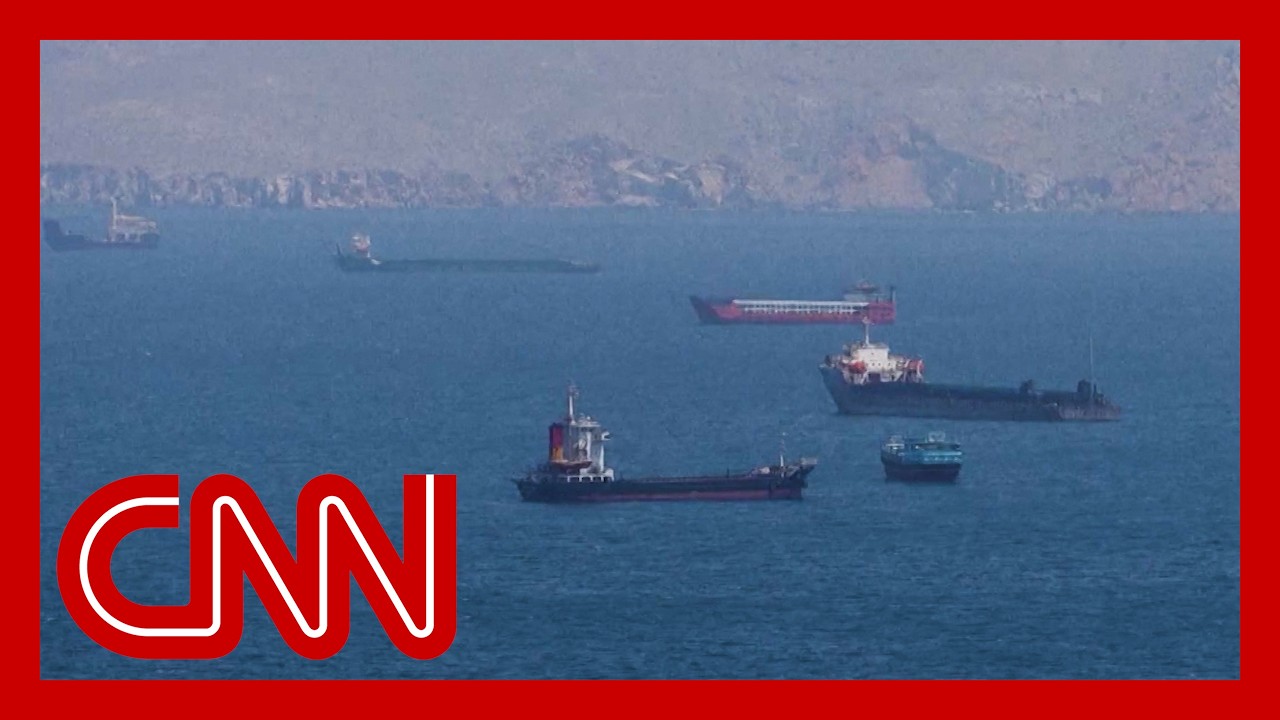
Escalation in the Strait of Hormuz: A Turning Point for Maritime Security
In recent hours, tensions in the Strait of Hormuz have sharply escalated, reflecting the intricate dynamics of U.S.-Iran relations and the geopolitical landscape in the Middle East. While initial reports suggested a positive trajectory in negotiations—potentially including talks in Islamabad—the situation has deteriorated dramatically. Iranian forces were reported to have fired upon two commercial vessels, igniting fears for both maritime safety and global oil markets.
The first incident involved a tanker near the coast of Oman, where two Iranian Revolutionary Guard Corps (IRGC) gunboats opened fire without warning. This reckless act came just hours after Iranian officials announced a temporary reopening of the Strait of Hormuz, a critical passage for global oil trade. Fortunately, the crew aboard the tanker remained unharmed, although the attack has raised serious concerns about the safety of shipping routes in the region.
In a second incident, an unidentified projectile struck a container ship in the same vicinity, damaging some cargo but causing no environmental harm. These attacks occur against a backdrop of rising tensions within Iran, where hardliners are publicly criticizing the government for what they perceive as a soft response to U.S. pressures. President Trump’s announcement about maintaining a blockade has seemingly exacerbated these internal fissures, placing moderates who advocate for negotiations at odds with hardliners demanding a tougher stance.
The Iranian regime’s mixed signals demonstrate its precarious balancing act. Initially, the decision to reopen the Strait was seen as a gesture of goodwill, possibly in anticipation of U.S. concessions related to a ceasefire in Lebanon orchestrated by Pakistani negotiators. However, as President Trump’s administration reiterated its commitment to a blockade, hardliners felt emboldened to provoke military conflicts, culminating in the recent attacks.
This strategic shift raises an urgent question: Can progress in U.S.-Iran talks continue amidst these provocations? Relations have plunged back into discord, obscuring what seemed like a pathway toward diplomacy just hours earlier. The president is expected to provide further updates, but the international community watches anxiously as the stakes grow higher.
The implications of these maritime incidents extend beyond the immediate regional security concerns. The shipping industry, which relies heavily on the Strait of Hormuz for oil transport, now faces an uncertain future. Prior to recent tensions, over 130 vessels navigated this strait daily. Currently, that number has plunged to an alarming low of around 20 ships, a clear indication that fears of Iranian aggression are chilling operations.
Ben Worskill, a correspondent for Yahoo Finance, emphasized the ripple effects on oil prices. With crude oil prices recently plummeting, market analysts now anticipate a potential rebound. The underlying anxiety regarding maritime security could influence not only shipping logistics but also fuel supply chains, potentially leading to higher gas prices for consumers worldwide. As these developments unfold, it is clear that the shipping industry will require more than assurances from governments; concrete actions and security provisions will dictate the future of maritime traffic through the Strait of Hormuz.
Moreover, President Biden’s administration is facing mounting pressure to stabilize gas prices domestically while navigating these geopolitical challenges. As he delivers messages of economic resilience, public expectations around fuel prices remain high. While the initial narrative hinted at short-term pain leading to long-term gain, market signals suggest that a stable decline in gas prices may take considerably longer than anticipated.
In conclusion, the situation in the Strait of Hormuz highlights the intricate interplay between military actions and diplomatic efforts. As the region hovers at a critical juncture, the actions of Iranian hardliners and responses from the U.S. will significantly influence both maritime security and the global oil market. With oil prices poised to fluctuate and shipping routes remaining perilous, the stakes are undeniably high—not only for the countries involved but for the global economy at large. The world watches closely, as clarity is needed more than ever in this complex geopolitical landscape.