Escalating Tensions: The Fallout from the Recent Israel-Iran Conflict
The recent uptick in violence between Israel and Iran has drawn international scrutiny as the consequences of an Israeli airstrike reach far beyond the immediate fatalities. Tuesday’s missile strikes by Iran on Israel were identified as retaliation for the assassination of prominent figures in Iran’s security apparatus, including Ali Larijani, Iran’s national security advisor. The attack not only claimed the lives of two elderly civilians in central Israel but also raised concerns regarding regional stability.
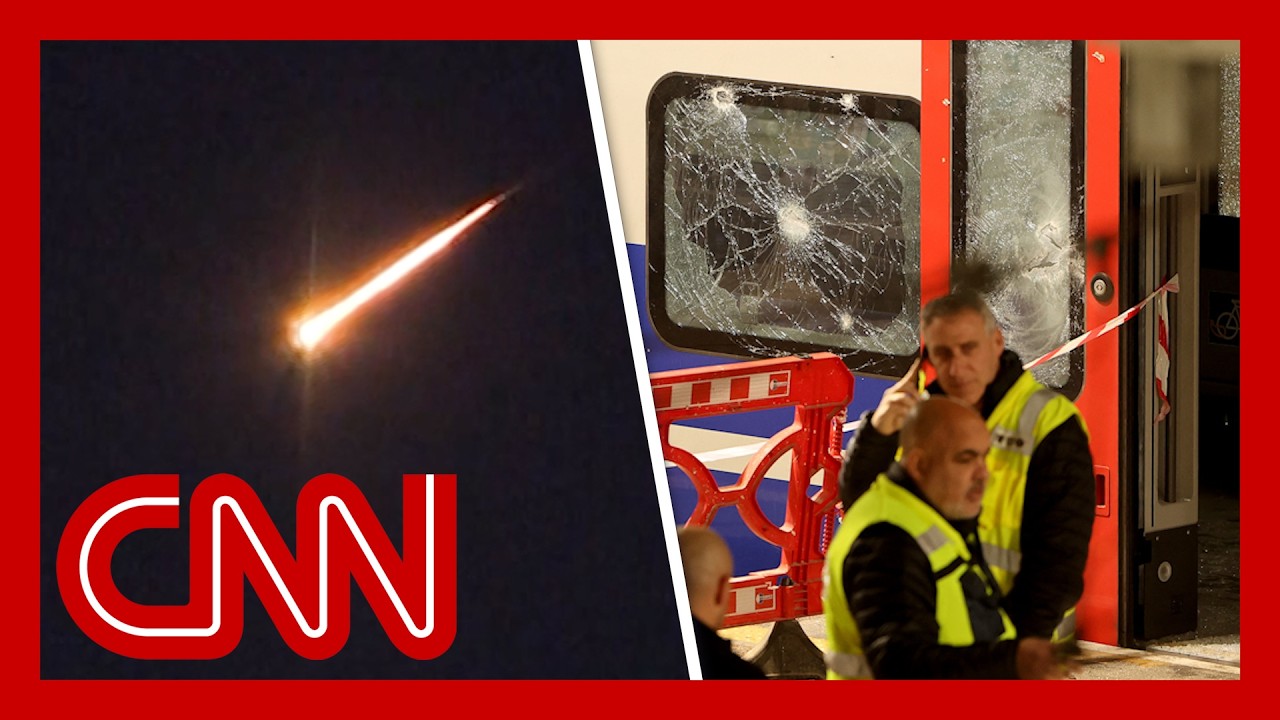
Located in Ramat Gan, just outside Tel Aviv, the missile strike resulted in collateral damage that affected multiple neighborhoods and even a train station. Eyewitness reports describe the grim scene where paramedics found two people in their seventies, lifeless at the site of the explosion. Their families received news of the tragic loss, a stark reminder of the ordinary lives disrupted by global political machinations.
The missile in question was outfitted with cluster munitions, which are designed to disperse smaller bomblets over a wide area. While this allows for a broader impact, it also raises ethical questions concerning civilian safety. The incident marks a shift in Iran’s military strategy, as they continue to update their ballistic missile capabilities despite losing a significant portion of their military infrastructure. Reports indicate that approximately 70% of Iran’s missile launchers have been destroyed, yet their ability to retaliate remains intact.
Jeremy Diamond, a CNN correspondent on the ground, provided insights into the nature of these missile attacks. He noted that while the sheer volume of missile strikes from Iran may have diminished, the sophistication of the munitions has increased. The introduction of cluster munitions into their arsenal allows them to deliver multiple smaller bombs over a broader range. This strategy has tactical implications, particularly as Iran appears to be coordinating its military efforts with Hezbollah, further complicating Israel’s air defense systems.
In response to the attacks, Israeli Prime Minister Benjamin Netanyahu expressed a determination to continue operations until they achieve broader objectives in the region. His statements, invoking the Persian New Year, suggested that the fight against Iranian operatives will not relent. Netanyan’s remarks aimed not just at Iran but also seemed to bolster morale within the Israeli populace amidst a chilling cycle of violence.
The assassination of Larijani, alongside Ghulam Reza Soleimani—commander of a paramilitary group responsible for internal repression—represents a significant strategic loss for Iran. Analysts assert that Larijani played a crucial role in navigating Iran’s complex security ecosystem and could have even acted as a mediator in ongoing negotiations with the United States. His removal serves not only as a direct blow to Iranian leadership but also threatens to unravel the delicate equilibrium within Iran’s power structures.
The Iranian government now faces pivotal questions about succession. Who will fill the vacuum left by Larijani? Though numerous figures might step up, the challenge remains daunting, as potential successors risk becoming targets themselves. The ongoing Israeli operations signal a commitment to sever the connective tissue binding various factions of the Iranian regime, thereby complicating its governance even further.
This precarious situation impacts other regional players, particularly Gulf states that are keeping a watchful eye on the unfolding events. The paradox is clear: while many in the region wish to avert a full-scale war, the apparent lack of sympathy for Iranian leaders only fuels the desire for continued military action against them.
As the situation unfolds, observers must consider the broader implications. Will Iran’s military response escalate further, or will diplomatic channels emerge once more? The answer remains uncertain. However, one thing is clear: the consequences of this conflict extend far beyond the immediate casualties, enveloping the region in a cycle of violence with the potential for escalation. The world watches closely, hopeful for a de-escalation yet wary of the tides of history that have often favored conflict over resolution.