Understanding Ontario’s Recent Earthquake: A Closer Look
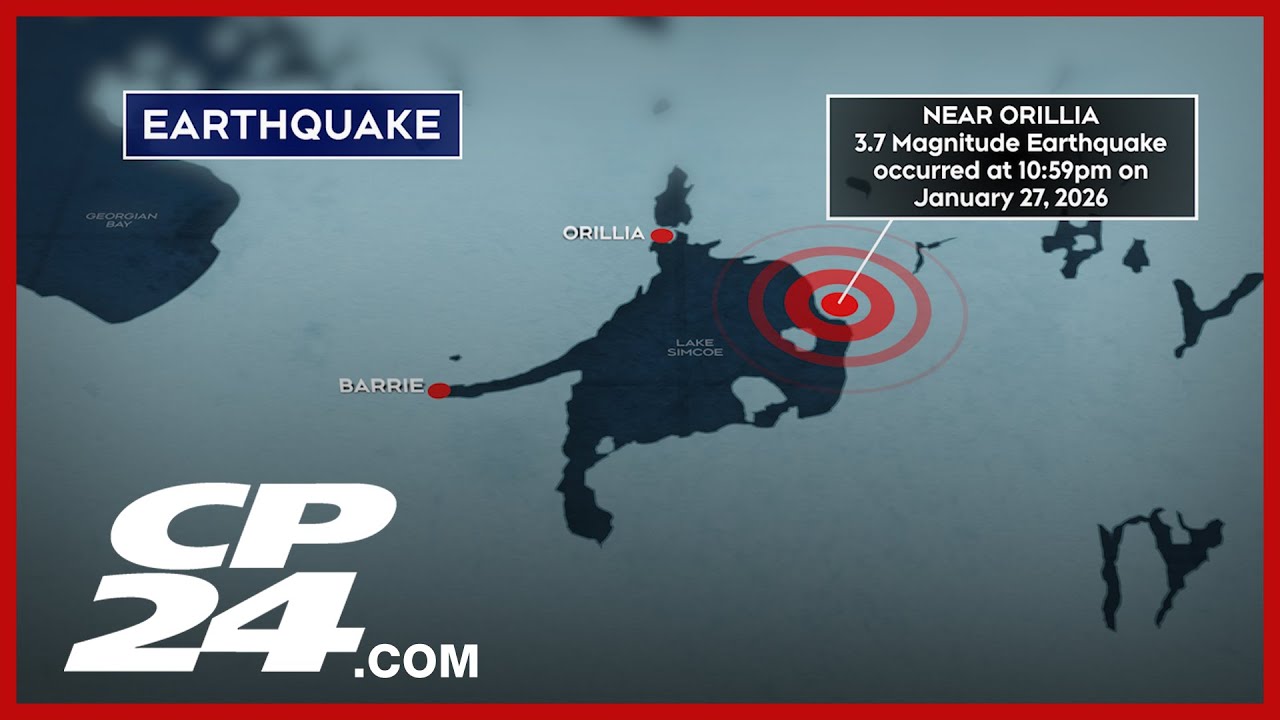
Late last night, Ontario experienced a magnitude 3.7 earthquake, a rare occurrence for this region. The tremor, reported by Earthquakes Canada, struck at 10:59 p.m. and had its epicenter located approximately 23 kilometers southeast of Aurelia. Reports flooded in, with about 2,200 individuals claiming to have felt the ground shake. The sensation was reported across a vast area, stretching from Kitchener to Belleville, and even reaching as far south as Niagara Falls. Fortunately, there are currently no reports of damage or injury.
To shed light on this seismic event, we spoke with Dr. Adi Salvadari, a researcher and programmer at the Ontario Science Center. Dr. Salvadari noted the rarity of earthquakes in this part of Canada. "Ontario is situated smack in the middle of the North American tectonic plate," he explained. Typically, earthquake activity occurs when stress builds up in the Earth’s crust and is released in the form of shock waves. However, such events are uncommon in stable regions like Ontario.
While seismic activity does occur sporadically—last night’s earthquake being one example—Dr. Salvadari emphasized that it was characterized as minor. He indicated that the magnitude of 3.7 is generally insufficient to cause significant damage or alarm.
A logical concern following an earthquake is whether it signals larger seismic events. Dr. Salvadari reassured that residents need not fret. "There’s no giant aftershock lurking in the wings or a massive earthquake on the horizon," he said. The southern Great Lakes seismic zone, where Ontario resides, has a historically low frequency of significant earthquakes. In fact, the region has only experienced two earthquakes reaching a magnitude of five or greater, dated back to 1857 and 1957. He suggested that it’s possible for Ontario to experience one or two minor quakes of magnitude 2.5 or greater in a typical year, but this is not alarming.
Another term that arose during the conversation was "frost quake." This phenomena occurs when fluctuating temperatures cause moisture in the ground to freeze and expand rapidly, resulting in seismic activity. However, Dr. Salvadari clarified that last night’s tremor was a legitimate earthquake, not a frost quake. The event was a release of built-up stress within the rock strata, which produced the seismic shock waves felt by many.
To further educate readers, Dr. Salvadari provided a brief overview of how earthquakes work. The Earth’s crust is divided into tectonic plates, which are in constant motion. Friction between these plates builds up energy, akin to trying to pop your knuckles or squeezing through a crowded subway. Eventually, that tension culminates in a release, often along fault lines where plates meet and grind against each other.
Interestingly, even in intraplate regions like Ontario, small-scale seismic activity can occur. These areas can house pockets of stress that may lead to minor earthquakes, characterized by subtle ripples rather than the more intense shocks that often accompany quakes along active fault lines.
In summary, the magnitude 3.7 earthquake that struck central Ontario is a reminder of the dynamic and, at times, unpredictable nature of our planet. While last night’s event was minor and unlikely to lead to catastrophic repercussions, it highlights the necessity for ongoing monitoring and understanding of geological activities. As we advance our scientific knowledge and technology, such insights will prove vital for public awareness and preparedness in the face of natural phenomena.
Dr. Adi Salvadari’s insights have brought clarity to this event, reassuring Ontarians that while earthquakes may be unusual in their area, they remain a fascinating aspect of Earth science, deserving of our attention and understanding.