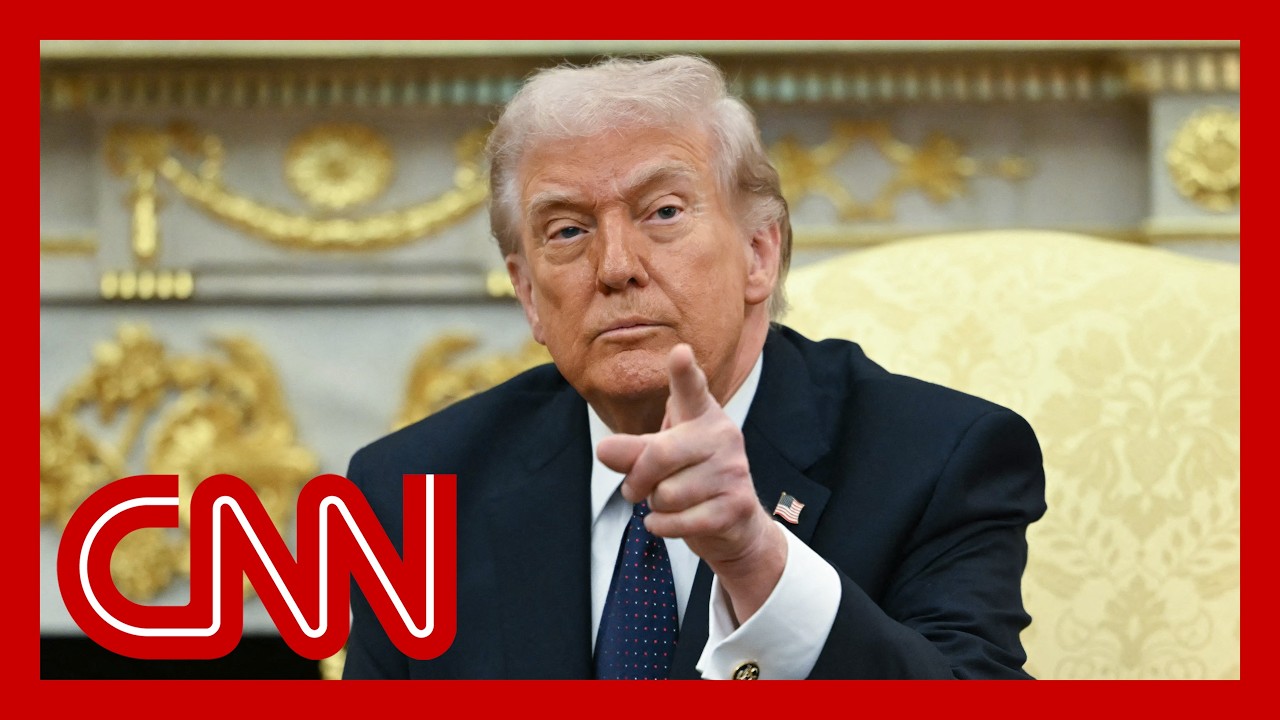
In a bold assertion of foreign policy intent, the President indicated a desire to personally influence the selection of Iran’s next supreme leader. During a conversation with Axios global affairs correspondent Barack Rave, he commented on the current leading candidate, the son of the late Supreme Leader Ayatollah Khomeini, labeling him a “lightweight” and unacceptable for the position. This direct involvement mirrors his previous engagement in Venezuela, illustrating a potentially aggressive stance on U.S. intervention in foreign leadership transitions.
President Trump’s reasoning seems to stem from a strategic desire to prevent a repeat of past grievances with Iran, particularly regarding its nuclear ambitions. He expressed concern that maintaining a leadership in Iran akin to that of Ayatollah Khomeini would lead the U.S. back into a state of conflict within five years. The underlying theme is clear: a change in leadership is not merely a matter of political preference but a necessity to avert escalating tensions that have historically defined U.S.-Iran relations.
Barack Rave elaborated on the implications of the President’s comments, underscoring the complexity of Iranian politics. The selection of a new leader is traditionally conducted by the Assembly of Experts—an influential body of clerics—but the President’s suggestion of direct involvement raises questions about the power dynamics at play. Moreover, as CNN’s chief international security correspondent Nick Payton Walsh pointed out, the comparison of the Iranian situation to Venezuela could reflect a misunderstanding of the profound ideological roots that underpin Iranian governance.
The U.S. experience in Venezuela, marked by a relatively swift power transition following the Maduro regime, contrasts starkly with the deeply entrenched clerical structure in Iran. The government in Iran is not merely political but is infused with ideological zeal, derived from a revolutionary historical context that resists external influence. Walsh indicates that any suggestion of U.S. involvement in the choosing of Iran’s leadership is inherently complicated and could provoke significant backlash among both clerical leaders and the population itself.
As the internal struggle for Iran’s leadership intensifies amidst ongoing tensions with the U.S. and Israel, the notion of an American role in selecting a leader is fraught with potential for further alienation. David Sanger of CNN noted that many Iranians might instinctively recall the U.S.’s involvement in the 1953 coup that installed the Shah—an event that continues to shape perceptions of American foreign policy in the region. The specter of foreign interference can complicate hopes for domestic upheaval fueled by popular support, introducing a layer of skepticism regarding U.S. intentions.
Further complicating matters are divergent views regarding the potential outcomes of leadership change in Iran. The options appear stark: an uprising led by citizens lacking organization; a continuation of the hardline status quo; or a move towards a government more amenable to negotiation. Given the fundamental ideological differences that define the current Iranian regime, the prospect of finding a compromise candidate acceptable to both the U.S. and the Iranian populace appears exceedingly slim.
Moreover, insights into the President’s decision-making process reveal a tension between instinct and intelligence assessments. There are suggestions that rapid engagements in foreign affairs emerge from an eagerness to capitalize on perceived military successes rather than a thoroughly articulated strategy. This approach risks escalating conflicts even further, particularly in light of the recent military actions taken by the U.S. in the region.
In conclusion, President Trump’s call for direct involvement in Iran’s leadership selection reflects a profound shift in diplomatic ethos, acknowledging historical patterns while attempting to preempt potential conflicts. However, the complexities inherent in Iranian political structures and the historical context of U.S.-Iran relations caution against oversimplifying the path to peace. The necessity for a more nuanced understanding of foreign dynamics is clear; there are few parallels between Venezuela and Iran, and the diplomatic calculus will require far more than merely appointing a leader deemed preferable by external powers. The stakes are high; both regional stability and the lives of millions hang in the balance.