President Trump’s Tariff Escalation: A Defiant Response to Supreme Court Ruling
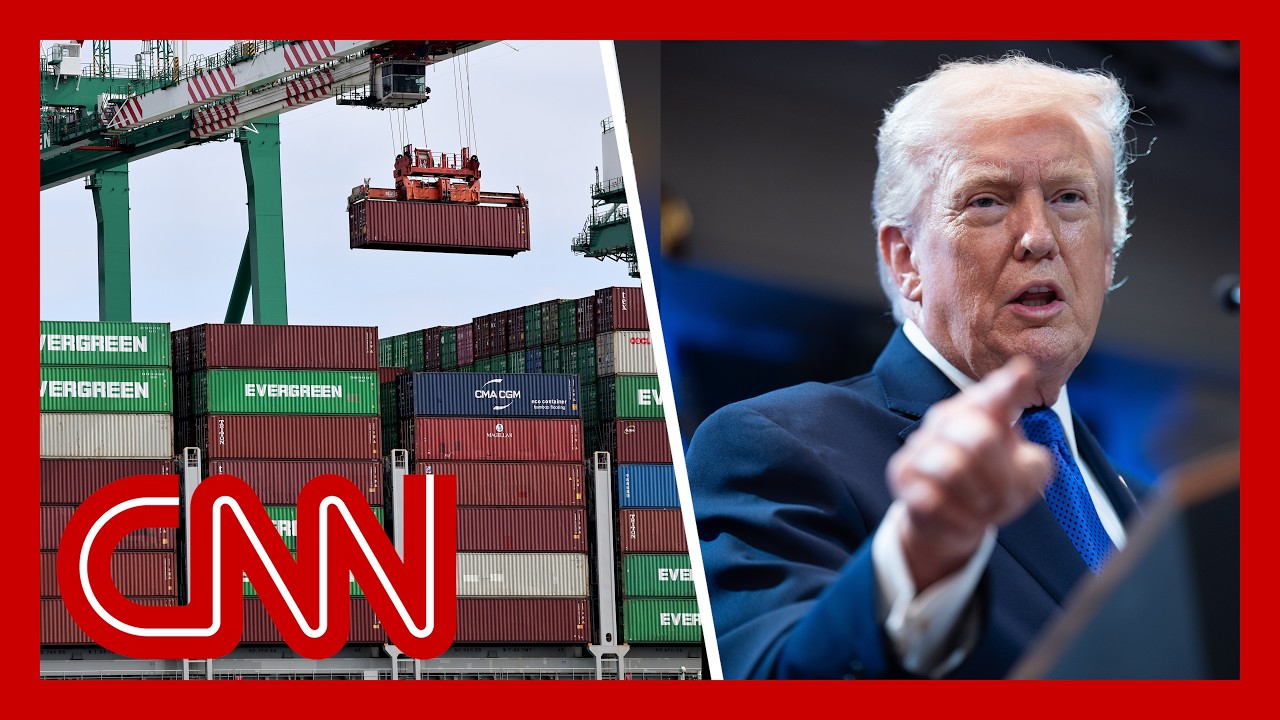
In a dramatic turn of events, President Trump has announced plans to implement a new round of tariffs, igniting further tension in an already volatile trade environment. Following a recent Supreme Court ruling that deemed his broad emergency trade duties illegal, Trump responded defiantly by raising worldwide tariffs to 15%, effective immediately. The ruling has shaken the foundations of one of his administration’s cornerstone economic policies, prompting reactions both within the United States and from global partners.
On social media, the president expressed his deep dissatisfaction with the Supreme Court’s decision, referring to it as "extraordinarily anti-American." This rhetoric reflects a broader pattern in his administration—as Trump has often leveraged trade policy as a tool for addressing perceived injustices in international dealings. He framed the 15% tariff increase as a necessary measure, asserting that many countries have taken advantage of the U.S. for decades without consequences.
CNN’s Julia Benbrook elaborated on the implications of these tariffs, noting the president’s reliance on a different statutory framework, Section 122, to justify his actions. This law allows temporary tariffs for up to 150 days, after which congressional approval is required for long-term implementation. Naming specific countries he believes have exploited the U.S., Trump employed a familiar narrative, coupling his trade policies with notions of nationalism and economic pride.
The Supreme Court ruling, which included decisions from justices appointed by Trump himself, has provoked mixed reactions. During his comments, he expressed disappointment particularly towards Justices Amy Coney Barrett and Neil Gorsuch, who sided with the ruling that invalidated the sweeping tariffs. Trump’s frustrations were palpable as he noted that their decision could be viewed as an embarrassment to their families. Contrarily, he praised Justice Brett Kavanaugh, referring to him as a "new hero."
As Trump solidifies his stance on tariffs, the implications extend beyond American borders. Global reactions have ranged from cautious optimism to outright concern. In Europe, French President Emmanuel Macron welcomed the Supreme Court ruling as a testament to the importance of checks and balances in governance. Meanwhile, the European Commission has stated its intention to analyze the ruling carefully, emphasizing the need for stability in transatlantic trade relationships.
In the UK, businesses expressed a mix of relief and uncertainty regarding their ongoing trading relationship with the U.S., stating that while they hope for favorable conditions to prevail, the lack of clarity surrounding future tariffs creates apprehension. This sentiment reverberates across Asia, where countries such as South Korea and Taiwan are keenly observing the unfolding events. Taiwan, in particular, has been at the center of the ongoing trade rift, with significant U.S. imports from the island beginning to exceed those from China.
The small businesses affected by these tariffs remain in a precarious position. Many of the plaintiffs involved in the Supreme Court case were small business owners who argued that the tariffs amounted to unlawful taxation. While the court’s ruling was a victory for these enterprises, the lingering effects of uncertainty and legal expenses have left many feeling vulnerable. As one CEO articulated, the road to recovery feels daunting, akin to repairing shattered pieces after government overreach.
Discussions among business owners reveal a collective anxiety regarding pricing and inventory strategies. Many have been forced to navigate the complexities of escalating costs while striving to maintain customer loyalty. Store owners, particularly in industries reliant on imports—such as footwear—are grappling with how best to adjust their operations amid fluctuating prices that result from tariffs.
As President Trump prepares for his upcoming State of the Union address, where he will likely revisit these issues, the broader implications of his trade policies remain unresolved. While the administration’s aggressive posture on tariffs is intended to bolster domestic industry, the surrounding uncertainty creates a challenging environment for businesses striving for stability and predictability.
As the global landscape shifts in response to Trump’s tariffs, the practical repercussions will play out in the months ahead, influencing both domestic markets and international relations. How these tariffs will ultimately shape the future of U.S. trade policy remains an open question, a reflection of an administration increasingly willing to confront established norms in pursuit of its agenda.