Unpacking the Recent Rescue Operation in Iran: Analyzing the Key Questions
Last week’s dramatic rescue operation in Iran has left many analysts and observers with more questions than answers. As details have emerged from various sources, including the White House, there are several critical inquiries that deserve a deeper examination.
To begin with, the operation started with a known combat search and rescue capability involving an F-15 aircraft, specifically the F-15E Strike Eagle. This jet, flown by a seasoned pilot, was purportedly shot down during its mission. However, one of the pressing questions is: what exactly was this aircraft doing deep inside Iranian territory? Understanding its mission is essential to grasp the broader context of U.S. operations in the region.
The complexity of the situation escalated with reports of a second U.S. airman needing rescue, which involved a weapon systems officer. The rescue attempt delved into the hazardous territory around Isfahan, a site of significant concern due to its link to Iran’s nuclear enrichment capabilities. This connection raises another inquiry: why were U.S. forces conducting operations so closely associated with a facility known for nuclear proliferation?
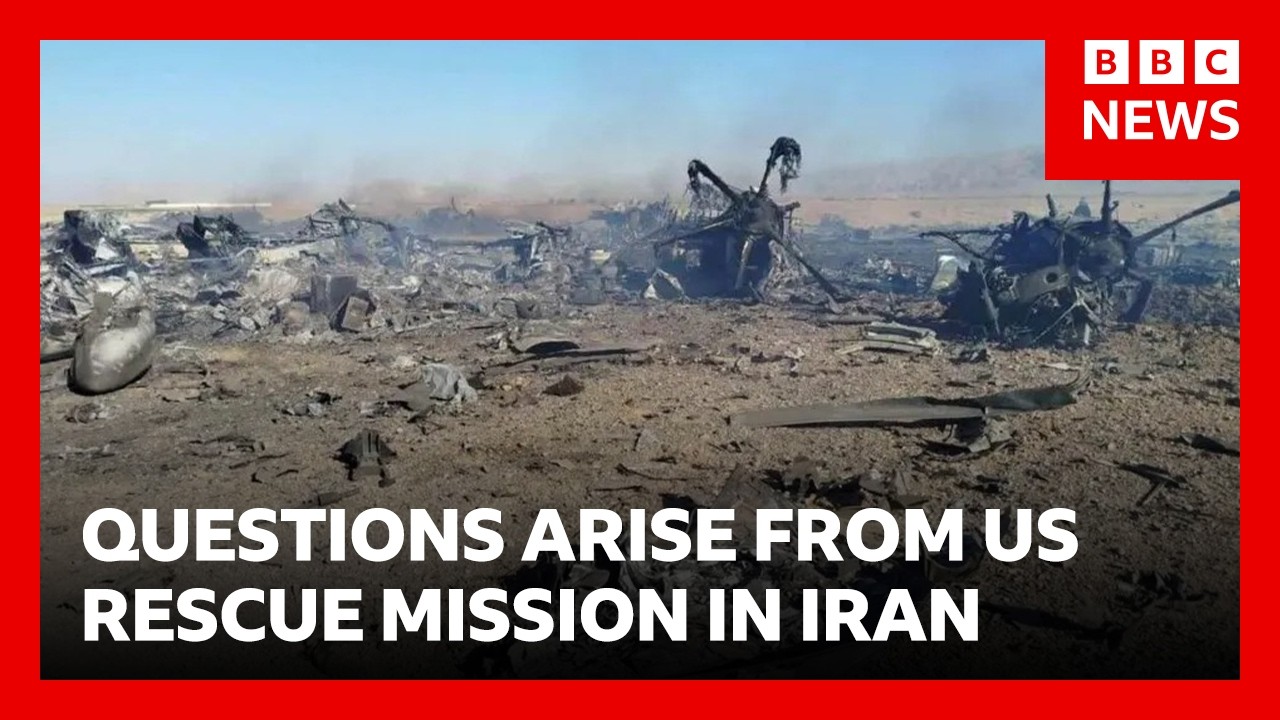
The destruction of U.S. assets—specifically the HC-130J Hercules and MH-6 Little Bird helicopters—at a forward operating base (FOB) near Isfahan complicates the narrative further. Issues surrounding these aircraft extend beyond mere tactical considerations; they involve strategic implications. Reports indicated that these helicopters were rendered inoperative due to "sinking into the ground," yet open-source intelligence suggests a more complicated reality. They may have sustained enemy fire during preliminary operations, unrelated to the rescue mission.
An FOB in this volatile region is significant not just for its military value but also for its geographical location concerning Iran’s nuclear program. The area around Isfahan has been historically pivotal for Iran’s enrichment processes, and reports indicate that 440 kg of 60% enriched uranium, a material with potential weaponization applications, might still be present in the vicinity.
This leads into another vital consideration: were there two different operations at play? The sheer scale of the U.S. presence—approximately 100 Special Forces operators—seems disproportionate for rescuing a single airman. Could they have also been attempting to secure, if not retrieve, the missing uranium? Transportation logistics within this operation must be questioned. The MH-6 Little Bird, while effective for special operations, cannot feasibly carry a load close to half a ton.
Interestingly, sightings of a U.S. C-295W air transport aircraft have surfaced. These specialized planes, capable of operating in rugged environments, could ostensibly be utilized for transporting significant weights. Its presence serves to bolster theories suggesting that the operation might have encompassed multiple objectives, including a possible seizure or monitoring of nuclear materials.
The tension surrounding these events touches on broader geopolitical ramifications. The Iranian Revolutionary Guard Corps (IRGC) and various Basij forces value operational secrecy and have substantial numbers that could complicate U.S. maneuvers. Were U.S. forces aware of an imminent threat from these groups, thus necessitating the risk of such a pronounced operation in an area fraught with considerable challenges?
In summary, the rescue operation in Iran unveils a complex tapestry of military logistics, strategic goals, and geo-political ramifications. With several unanswered questions lingering about the mission’s objectives, troop deployments, and the implications of Iranian nuclear material, the situation calls for continued scrutiny. Open-source intelligence provides a wealth of speculation, and while some details have been revealed, many facets remain shrouded in uncertainty. This incident serves as a critical reminder of the precarious balance of power in the region and the intricate consequences of military engagement. The unfolding narrative will warrant close observation as more information emerges.