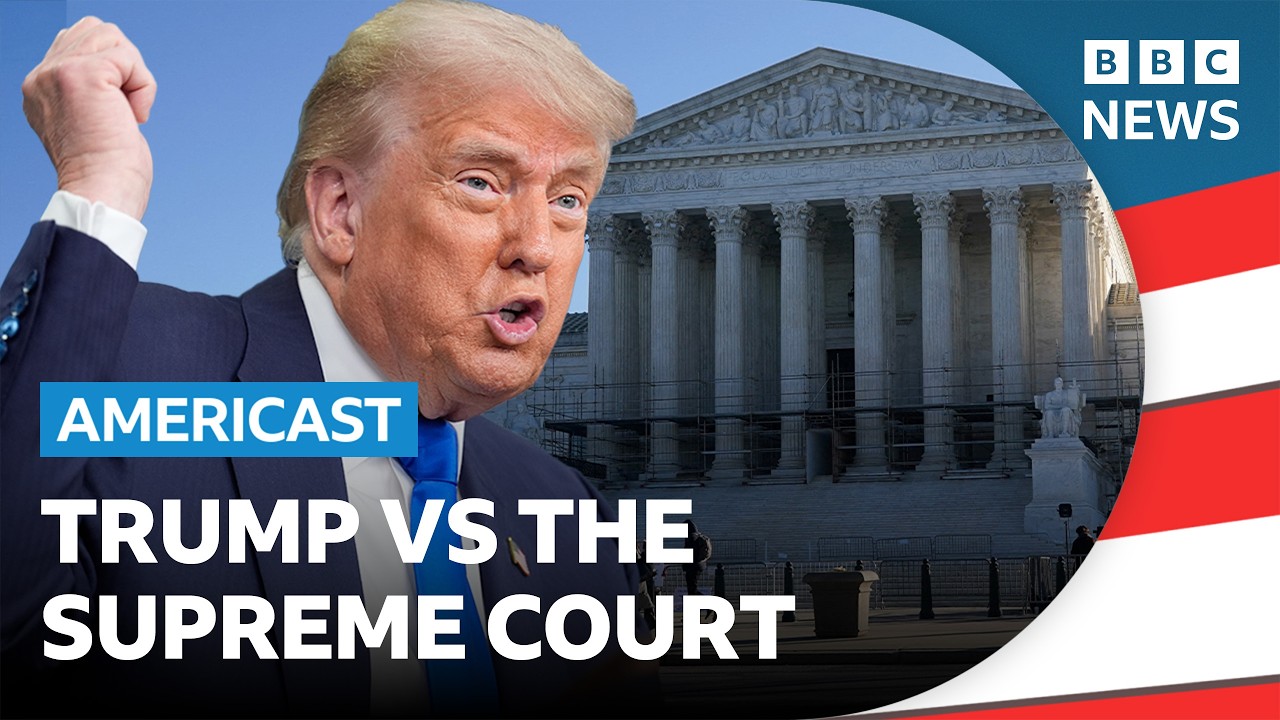
The Supreme Court and Donald Trump’s Second Term: A Closer Look at Judicial Power
In the current political landscape, the Supreme Court looms large, playing a pivotal role in shaping the trajectory of Donald Trump’s second term. Recent decisions have not only favored the White House but also illuminated the complex interplay between judicial authority and executive power.
Just days ago, the Supreme Court handed down significant rulings that bolster the Trump administration’s policy goals. Among these was a verdict granting access to social security data, impacting millions of Americans’ personal information, and another permitting cuts to federal diversity and inclusion funding. Recently, the Court also upheld Trump’s authority to terminate two Biden-era appointees, sparking surprise across legal and political circles.
Questions arising from these developments raise a fundamental inquiry: Is the Supreme Court merely an extension of Trump’s power, or will it act as a check on executive overreach? The answer to this question carries weight, particularly in an era where the lines between governmental branches are increasingly blurred.
The Supreme Court has made its mark on several substantial issues involving the Trump administration—issues that extend beyond mere legal interpretations. For instance, its future decisions will likely address crucial matters such as immigration, executive appointments, and the president’s extensive trade authority, particularly concerning his ability to impose tariffs.
With a conservative majority of 6 to 3, three justices appointed by Trump himself, concerns about legitimacy and fairness in the Court’s rulings are now more pronounced than ever. Democrats and advocates of social equity view the Court as an obstacle to progress, particularly following its controversial ruling to overturn Roe v. Wade. This has shifted public perception, making the Court a central topic in American political discourse—a departure from its historically more obscure role.
The 2020s have seen the Supreme Court grapple with issues that many assumed would remain settled law. Trump’s appointments have drastically shifted its ideological posture, leading to a series of landmark decisions that have dismantled decades-long legal precedents. These include rulings affecting racial preferences in education, federal regulatory authority, and gun rights. As a result, the current Court is arguably the most conservative in over 75 years.
The questions surrounding the Court’s decisions are multifaceted. Critics argue that it is expanding presidential power in unprecedented ways, echoing sentiments from historical moments where the judicial branch has shaped American society profoundly. Cases like Brown v. Board of Education transformed educational landscapes and societal norms; now, similar potential exists for rulings on executive power to define or reign in presidential authority.
Turning to the present, ongoing cases such as those regarding tariffs and birthright citizenship will play critical roles in determining the extent of Trump’s executive powers. Oral arguments have indicated that even some conservative justices harbor skepticism about Trump’s broad claims to unilateral authority, particularly concerning tariffs, which Congress traditionally manages.
Yet, as legal experts suggest, while judicial decisions may temporarily check Trump’s ambitions, they do not negate his overall influence. Should Congress align with a future Democratic president aiming to curtail power through potentially contentious measures like "court packing," the long-term ramifications could further complicate the judicial landscape.
As the term progresses and critical judgments loom, it remains to be seen whether the Supreme Court will indeed assert itself against the executive branch. As history bears out, courts can act unexpectedly, sometimes siding with the concerns of the public rather than the assertions of power.
In an age marked by rapid political shifts, the Supreme Court’s ability to navigate this evolving landscape will significantly influence not only Trump’s legacy but also the broader principles of American governance for generations to come. Ultimately, the relationship between the Supreme Court and the presidency stands at a crossroads, with each decision revealing more than legal principles, but rather the essence of democratic balance.
In conclusion, the evolving narrative surrounding Trump’s administration is inextricably linked with the fate of the Supreme Court. As this vital institution endeavors to define the boundaries of executive power, its decisions will resonate through the annals of American history, reaffirming or redefining the principles of justice and equality under the law.